Category Archives: Sustainable Tourism

Balance – the sustainable tourism challenge

Sustainable tourism definitions almost always combine two big, important ideas. The first idea comes from the Brundtland Report – Our Common Future – in which they say sustainable development  “meets the needs of the present without compromising the ability of future generations to meet their own needs” . The second big idea is John Elkington’s ‘Triple Bottom Line” that requires consideration of not only the “profits” but “people” and “planet” as well. These big ideas provide a great foundation but they also present a real challenge for anyone attempting to develop sustainable tourism.

The challenge of sustainable tourism is striking the balance between people, planet and profits – to meet the needs of the present without compromising the future. This challenge is easy to grasp – conceptually – but it is hard to know where to start. Adding to the challenge – there is plenty of scope for well-intentioned folks to disagree on what should be done and there really is no single, black and white, “right” answer.

Fortunately, there is a growing body of great advice on what to do. Practical advice on environmental practices, cultural and social tourism and even market development information. But the challenge of sustainable tourism remains because the best answers incorporate another level of thinking…

The key to arriving at the best answer lies in finding the right balance. Too often we treat element separately – addressing environment separately from social and cultural issues or economics. Sustainable tourism is more programs for people, planet and profit – it is programs that integrate all of these things together – to come to the best possible outcome for today – and tomorrow. Sustainable tourism requires looking at them all together as a whole system.
A blueprint for great destination management

The Global Sustainable Tourism Council is currently seeking public input on a set of criteria for destinations aiming for sustainability. The criteria – designed to be the “minimum” set of activities  – will challenge many destinations and hopefully spur them on to greater efforts.

The criteria presented by GSTC create a great – and comprehensive – list of things every destination should be thinking about to ensure that the long-term benefits of tourism are realised. With so many of us so busy on the challenges of the “small stuff” in the  inbox this list is an excellent “reality check” that reminds of us of the “big stuff” that is truly important.

Tourism Ready

To many, tourism is an economic savior that can bring jobs and opportunity. Indeed there are tourism opportunities everywhere and markets for most any type of experience. But not all markets are the same and not all destinations have the ability to service the markets they want to attract.

I have been thinking a lot about the  “human traffic jam” on Everest this week and the tourists who undertake this type of travel. The market for this type of experience is somewhat limited by all sorts of factors – money, health, access, time involved etc to name a few. This type of tourism is also limited by facilities – and it seems that we are fast approaching capacity on the world’s largest mountain.

Visitors need services and, although the opportunity to see the unique and special trumps many hardships, there is definitely a minimum threshold of services for most people. Tourism is built on a foundation of basic infrastructure . In general, as the infrastructure and services increase, the potential market increases.

Which brings me to a great article in USA Today about Afghanistan Tourism. I am sure that there is a market for Afghanistan tourism today. But it is surely limited to a brave few. So Afghan tourism has two tasks:

1. They need to identify the tourists who are prepared to visit the country today and build from this (small) foundation.

2. They need to build the infrastructure for their own communities. As that infrastructure increases so too will opportunities for tourism offers to larger markets.

It is a balancing act with great “upside” and I wish them every success !

Indigenous Tourism Toolkit

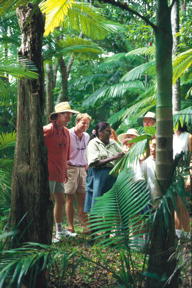
People in the Rainforest
Thanks to Tourism Queensland for the image.


Heritage Tourism is an important way for indigenous

communities to celebrate their culture and support their communities. It is also an important way for visitors to learn and appreciate the culture of people from places we visit.


Here’s a great indigenous ecotourism toolkit developed by a team for at the Australian National Training Authority.

Thanks to RobinNunkoo at University of Waterloo for sharing it !

What makes a sustainable destination ?

The Global Sustainable Tourism Council (GSTC)  is currently developing criteria for destinations. These criteria are important because they represent a baseline for destinations to undertake to ensure destination sustainability – the very minimum that place managers should consider when developing tourism for the long term…

GSTC is calling seeking input as they develop the criteria. To add your thoughts connect here – GSTC

Faces of Corporate Social Responsibility: Sir Richard Branson

There is real skepticism that companies can do well and do good. When discussion turns to the socially responsible actions of a company it seems inevitable that the motives of the company will be brought into question. The typical comment goes something like ” sure – they are the greenest company around… but its just so they can save money’. And yet such a situation has be to one an examples of a win-win for the company and the environment.

One of the “new” faces of corporate social responsibility is Sir Richard Branson. He is a successful entrepreneur with a commitment to doing good and making money while he does it. His “screw it, just do it” attitude for solving problems is getting a fair bit of airplay. Here’s a link to the article from today’s ‘Marketplace” on NPR.

Branson on CSR on NPR

Responsible Tourism

Consumer behavior is really core to many of the issues in smart, sustainable tourism. Just how people are adopting green behaviors is still an unanswered question but it is nice to see bits and pieces of evidence that attitudes and behaviors are improving !

Here’s the latest from Tripadvisor on green travel behaviors…